joondalup
Congratulations Yusef on passing your driving test on your second attempt

Great job Yusef on passing your driving test in Manual. A fantastic result
ocean reef driving lessons manual auto manual currumbine mullaloo heathridge joondalup instructors padbury hillarys burns beach iluka
Congratulations Callum on passing your PDA second time round
Great job Callum of Sorrento on passing your pda …..this time you remembered watch your speed in school zones. Well Done and thanks for choosing All Zones Driving School
driving lessons driving instructors joondalup ocean reef padbury marmion beldon duncraig manual lessons driving test connolly kinross burns beach iluka
Congratulations Bailey on passing your PDA on your second attempt

Awesome job Bailey of Burns Beach on passing your #pda . Thanks for selecting All Zones Driving School
perth northern suburbs ocean reef driving instructor driving lessons provisional driving licence joondalup heathridge connolly mullaloo hillarys
Congratulations Dhruv 1st Time Pass

A huge congratulations to Dhruv on passing your provisional driving licence first time ….brilliant result! Thanks for selecting ALL ZONES DRIVING SCHOOL
ocean reef joondalup instructors learner drivers provisional drivers licence manual driving lessons currumbine padbury hillarys
A Quick Look at the Practical Driving Assessment

How Does the Assessor Judge?
Driver and Vehicle Services has set a Driver Licensing Competency
Standard which describes the components of driving in detail. The standard
represents what the Department of Transport expects of an experienced,
competent driver. The Driver Competency Standard is available online at
www.transport.wa.gov.au/dvs.
During your PDA, the assessor will compare your performance to that
described in the Competency Standard. To pass the PDA you must have made
significant progress towards meeting the Competency Standard.
During your PDA the assessor will look at the components of good driving
skills and at how well you put the components together. The assessor makes
these checks while you are doing every day driving tasks as part of your PDA.
They will look at how well you:
n operate and guide the car;
n put the road rules into practise;
n fit in with other traffic; and
n see and respond to hazards.
How does the PDA work?
The PDA has five sections – during three sections you will be asked to follow
directions and during two sections you will have to perform set exercises.
When you are following directions, the assessor will be telling you when to
make turns at intersections and guiding you on the journey from the PDA site
and back again.
When you are performing exercises, the assessor will explain to you what you
have to do. You will have to decide the best way to do the exercise for yourself.
The exercises cover the sorts of tasks drivers often have to do, such as finding
somewhere to park in a car park.
learner drivers pda assessor driving lessons auto lessons manual driving lessons driving instructors ocean reef joondalup marmion kinross heathridge connolly burns beach mindarie edgewater
12 of !2 Most Asked About Questions
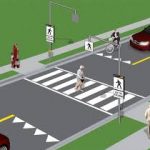
12. PEDESTRIANS
Pedestrians share the roads with drivers and cyclists and must obey the road rules. Pedestrians are vulnerable road users, so extra care is needed from all road users (including pedestrians themselves). Drivers Drivers should give way to pedestrians: • when turning; • when making a U-turn; • at all intersections and stop signs; • slip lane with a ‘stop’ sign or ‘stop’ line. Pedestrian crossings are marked by white or yellow stripes on the road and are usually signed. As a driver, approach a pedestrian crossing at a speed which allows you to stop safely if needed. Pedestrians Pedestrians crossing at traffic lights must obey the signals. If a traffic control signal shows a steady or flashing red pedestrian light, and you have not already started to cross, then you must not do so until the pedestrian light changes to green.
joondalup, ocean reef , kinross, iluka, currumbine, mullaloo, heathridge, beldon, drivers , learners, driving lessons, instructors, p plates , joondalup licensing centre, craigie, kallaroo, hillarys
Oktoberfest Specials

Check out our website for all packages ….and save
joondalup, ocean reef, driving lessons, instructors, pda, driving test, heathridge, connolly, burns beach, kinross, currumbine,
11 of 12 Most Asked About Questions

11. CYCLISTS
Cyclists share the same rights and responsibilities as drivers and must obey the road rules. Cyclists are vulnerable road users, so for their safety extra precautions and awareness are required from both cyclists and drivers. Drivers: • When overtaking cyclists, it is recommended to do so at a distance of at least one metre; • Must give way to cyclists if crossing an on-road bicycle lane; • Before opening a car door, ensure there isn’t a bicycle rider in the way; • When turning left – if a cyclist is in front, allow them to pass before making a turn; • Must not enter the green bicycle boxes (at some intersections).
Cyclists: • Must wear a helmet that is properly fastened; • Must have at least one brake and a warning device (bell/horn) working; • Must use a front white light and rear red light which can be seen for 200m during the night and in conditions of poor visibility. A red rear reflector visible for 50m is also required; • Can ride two abreast (side-by-side) on the road, with up to 1.5m between riders; • Can’t ride less than 2m behind a vehicle; • Are not allowed to pass on left of a vehicle that is turning left; • Must give way to vehicles exiting a roundabout; • Should ensure visibility by wearing reflective or fluorescent clothing; • When travelling on the road, can be on the left of the edge line.
16
11. CYCLISTS Cont.
Penalties Not wearing a helmet = $50 fine. Failure to have at least one effective brake and working warning device (e.g. bell) = $100 fine. Failure to have correct lighting for visibility = $100 fine. Bicycles can ride two side-by-side with up to 1.5m between riders. Failure to do so = $50 fine. Riding less than 2m behind a vehicle = $100 fine. Passing on the left of a vehicle that is turning left = $100 fine.
Penalties – Drivers Failing to overtake a bicycle at a safe distance = 4 demerit points and $400 fine. Entering a green bicycle box (at some intersections) = 2 demerit points and $200 fine
instructors, joondalup licensing centre, all zones driving school, ocean reef, joondalup, mullaloo, padbury, driving lessons, learners, currumbine, kinross, burns beach,
Practical Driving Assessment Fee Increase

All students please be aware of the price increase for practical driving assessment has increased to the amount of $81.40
driving tests, students, learner drivers, p plates, joondalup, ocean reef, driving instructors, mullaloo, iluka, burns beach, currumbine
10 of 12 Most Asked About Questions

10. FOLLOWING/HEADLIGHT DISTANCES
The laws for safe following and headlight distances exist with safety in mind. Here’s what you need to know: Safe following distance A safe following distance depends on your speed, driving conditions and the type of vehicle you are driving. In good conditions, you should drive at least two seconds behind the vehicle in front of you. To determine the two seconds – watch the vehicle in front as it passes a landmark, such as a tree, sign, power pole or overpass. As it passes the landmark, start counting ‘one thousand and one, one thousand and two’ (this takes about two seconds). If you pass the same landmark before you finish counting to two seconds, you’re too close. It is important to increase your following distance to at least 3 – 4 seconds if the weather or road conditions are poor, if you’re driving a heavy vehicle or towing a trailer. Headlight distance High beam headlights are not permitted: • if you’re driving less than 200m behind a vehicle; • if an oncoming vehicle is less than 200m away. In foggy conditions: • drive slowly; • turn on windshield wipers; • don’t use high beam headlights. Fog lights can be used in foggy conditions, dust storms or heavy rain. You are not permitted to drive with both headlights and fog lights on at the same time.
Penalties Failing to follow a vehicle at a safe distance = 2 demerit points and $200 fine. Inappropriate use of headlights/fog lights = 1 demerit point and $100 fine.
Joondalup Licensing Centre, Mirrabooka Licensing Centre, Ocean Reef, Burns Beach, Mullaloo, Heathridge, Connolly, Driving Test. Learner Driver, Instructor, P Plates, L Plates