driving
12 of !2 Most Asked About Questions
12. PEDESTRIANS
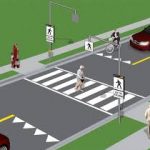
Pedestrians share the roads with drivers and cyclists and must obey the road rules. Pedestrians are vulnerable road users, so extra care is needed from all road users (including pedestrians themselves). Drivers Drivers should give way to pedestrians: • when turning; • when making a U-turn; • at all intersections and stop signs; • slip lane with a ‘stop’ sign or ‘stop’ line. Pedestrian crossings are marked by white or yellow stripes on the road and are usually signed. As a driver, approach a pedestrian crossing at a speed which allows you to stop safely if needed. Pedestrians Pedestrians crossing at traffic lights must obey the signals. If a traffic control signal shows a steady or flashing red pedestrian light, and you have not already started to cross, then you must not do so until the pedestrian light changes to green.
joondalup, ocean reef , kinross, iluka, currumbine, mullaloo, heathridge, beldon, drivers , learners, driving lessons, instructors, p plates , joondalup licensing centre, craigie, kallaroo, hillarys
Oktoberfest Specials

Check out our website for all packages ….and save
joondalup, ocean reef, driving lessons, instructors, pda, driving test, heathridge, connolly, burns beach, kinross, currumbine,
11 of 12 Most Asked About Questions

11. CYCLISTS
Cyclists share the same rights and responsibilities as drivers and must obey the road rules. Cyclists are vulnerable road users, so for their safety extra precautions and awareness are required from both cyclists and drivers. Drivers: • When overtaking cyclists, it is recommended to do so at a distance of at least one metre; • Must give way to cyclists if crossing an on-road bicycle lane; • Before opening a car door, ensure there isn’t a bicycle rider in the way; • When turning left – if a cyclist is in front, allow them to pass before making a turn; • Must not enter the green bicycle boxes (at some intersections).
Cyclists: • Must wear a helmet that is properly fastened; • Must have at least one brake and a warning device (bell/horn) working; • Must use a front white light and rear red light which can be seen for 200m during the night and in conditions of poor visibility. A red rear reflector visible for 50m is also required; • Can ride two abreast (side-by-side) on the road, with up to 1.5m between riders; • Can’t ride less than 2m behind a vehicle; • Are not allowed to pass on left of a vehicle that is turning left; • Must give way to vehicles exiting a roundabout; • Should ensure visibility by wearing reflective or fluorescent clothing; • When travelling on the road, can be on the left of the edge line.
16
11. CYCLISTS Cont.
Penalties Not wearing a helmet = $50 fine. Failure to have at least one effective brake and working warning device (e.g. bell) = $100 fine. Failure to have correct lighting for visibility = $100 fine. Bicycles can ride two side-by-side with up to 1.5m between riders. Failure to do so = $50 fine. Riding less than 2m behind a vehicle = $100 fine. Passing on the left of a vehicle that is turning left = $100 fine.
Penalties – Drivers Failing to overtake a bicycle at a safe distance = 4 demerit points and $400 fine. Entering a green bicycle box (at some intersections) = 2 demerit points and $200 fine
instructors, joondalup licensing centre, all zones driving school, ocean reef, joondalup, mullaloo, padbury, driving lessons, learners, currumbine, kinross, burns beach,
Practical Driving Assessment Fee Increase

All students please be aware of the price increase for practical driving assessment has increased to the amount of $81.40
driving tests, students, learner drivers, p plates, joondalup, ocean reef, driving instructors, mullaloo, iluka, burns beach, currumbine
10 of 12 Most Asked About Questions

10. FOLLOWING/HEADLIGHT DISTANCES
The laws for safe following and headlight distances exist with safety in mind. Here’s what you need to know: Safe following distance A safe following distance depends on your speed, driving conditions and the type of vehicle you are driving. In good conditions, you should drive at least two seconds behind the vehicle in front of you. To determine the two seconds – watch the vehicle in front as it passes a landmark, such as a tree, sign, power pole or overpass. As it passes the landmark, start counting ‘one thousand and one, one thousand and two’ (this takes about two seconds). If you pass the same landmark before you finish counting to two seconds, you’re too close. It is important to increase your following distance to at least 3 – 4 seconds if the weather or road conditions are poor, if you’re driving a heavy vehicle or towing a trailer. Headlight distance High beam headlights are not permitted: • if you’re driving less than 200m behind a vehicle; • if an oncoming vehicle is less than 200m away. In foggy conditions: • drive slowly; • turn on windshield wipers; • don’t use high beam headlights. Fog lights can be used in foggy conditions, dust storms or heavy rain. You are not permitted to drive with both headlights and fog lights on at the same time.
Penalties Failing to follow a vehicle at a safe distance = 2 demerit points and $200 fine. Inappropriate use of headlights/fog lights = 1 demerit point and $100 fine.
Joondalup Licensing Centre, Mirrabooka Licensing Centre, Ocean Reef, Burns Beach, Mullaloo, Heathridge, Connolly, Driving Test. Learner Driver, Instructor, P Plates, L Plates
9 of Most Asked About Questions

9. EMERGENCY VEHICLES
On Western Australian roads you must clear the way to allow every emergency vehicle using blue or red flashing lights and/or sounding an alarm to easily pass. But do you know the correct way to do this? Emergency vehicles include police, fire and ambulance services. When an emergency vehicle is approaching: • stay calm and check to see where it is; • give way to it by moving as far to the left of the road as possible; • if you can’t move left, slow down, indicate left and let the emergency vehicle drive around you; • use your indicator to signal your intentions to the driver of the emergency vehicle; • if you are in the left lane, allow other vehicles from an adjacent lane to move into your lane if they need to. When giving way to an emergency vehicle DO NOT break the law (e.g. drive through a red light, or speed).
Penalties Failure to give way to an emergency vehicle = 4 demerit points and $400 fine.
driving schools, learner driver, p plates, Joondalup, Mirrabooka, Ocean Reef, Mindarie, Burns Beach, drivers licence, Iluka, Marmion, Hillarys, Mullaloo, Heathridge, Beldon
8 of 12 Most Asked About Questions

8. OVERTAKING
To overtake safely, there are specific road rules that apply. Here’s what you need to know: Overtaking can be dangerous. When overtaking, make sure you have a clear view of oncoming traffic and use your indicator to signal your intentions to other drivers. Overtaking on the left Permitted when: • driving on a multi-lane road; • directed by an authorised person (e.g. police officer); • the vehicle(s) in the right lane is stationary and it is safe to do so; • a vehicle is indicating that it is turning right or making a U-turn. Overtaking on the right This is permitted when you’re both travelling in the same direction and you are not crossing a continuous white line. Overtaking a vehicle on the right is NOT permitted: • at a railway, pedestrian or children’s crossing; • at an intersection; • where there is a ‘no overtaking’ sign; • where there are single or double continuous centre lines; • where you do not have a clear view of approaching traffic. Motorists are required to overtake cyclists at a safe distance. It is recommended that cyclists are overtaken by at least a metre up to 70km/h and two metres at higher speeds. If you’re being overtaken – keep left; don’t increase your speed; and don’t prevent the vehicle from overtaking you
Penalties Failing to overtake at a safe distance = 4 demerit points and $400 fine. Overtaking at a railway/pedestrian/children’s crossing = 4 demerit points and $400 fine. Overtaking on continuous white line = 3 demerit points and $200 fine. Exceeding speed limit when overtaking = this will vary depending on speed.
driving instructors, driving lessons, safe driving, Joondalup, Marmion, Padbury, Iluka, Burns Beach, Mullaloo, Heathridge, Beldridge, Craigie, Hillarys, Ocean Reef, Currumbine
7 of 12 Most Asked About Questions

7. CROSSING CONTINUOUS LINES
Line road markings are there as a guide to how to use that road. There are edge lines, lane lines and centre lines. Do you know what they mean? Here’s what you need to know: There are three types of single continuous (unbroken) lines: 1. Edge Lines Are used to mark the edge of the road. You can only cross over an edge line when entering or leaving the road or passing a vehicle on the left that is turning right or making a U-turn. 2. Lane Lines Are used to define multiple lanes travelling in the same direction. If the lane line is continuous, don’t cross the line to change lanes. 3. Centre/Dividing Lines Are used to separate lanes travelling in different directions. If the centre/dividing lines are continuous on your side, do not cross that line unless you are turning right (i.e. leaving or entering the road) or making a U-turn. The same applies if there is a continuous line on the left of a broken or dotted centre line. Exception – If you need to avoid an obstruction, you may cross the continuous centre line(s), lane line or edge line providing you have a clear view of any approaching traffic.
Penalties Crossing the edge line of a road = $100 fine. Crossing a continuous line when changing lanes = 2 demerit points and $100 fine. Crossing a continuous centre line = 3 demerit points and $150 fine.
driving lessons, driving instructors, Mirrabooka, Joondalup, Hillarys, Ocean Reef, Beldon, Craigie, Edgewater, Mullaloo, Sorrento, Warwick Duncraig, driving schools, driving test
6 of 12 Most Asked About Questions

6. UNCONTROLLED INTERSECTIONS
Navigating intersections without traffic signals, stop signs or give way signs is all about knowing who has the right of way. Here we shed light on how to correctly approach such intersections: As a rule, at an uncontrolled intersection, always give way to the right, to oncoming vehicles (including bicycles) and pedestrians. Specifically: • If going straight ahead – give way to vehicles on your right; • If turning left – give way to vehicles to the right and pedestrians crossing the road you’re entering; • If turning left using a slip lane – give way to vehicles on your right and pedestrians crossing the slip lane; • If turning right – give way to vehicles on your right, any oncoming vehicles/bicycles who are going straight ahead or turning left, and any pedestrians crossing the road you’re entering.
Penalties Travelling straight ahead OR turning left in a slip lane – failing to give way to vehicles to the right or pedestrians = 3 demerit points and $200 fine. Turning left or right – failing to give way to vehicles to the right or pedestrians = 3 demerit points and $300 fine.
all zones driving school instructors, joondalup licensing centre, ocean reef, northern suburbs, driving lessons, provisional driving test
5 of 12 Most Asked About Questions
5. KEEPING LEFT
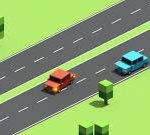
Keeping left on higher speed roads helps traffic flow. Here’s what you need to know:
On single lane roads you must drive as far to the left as practical (except motorcyclists).
On multi-lane roads if the speed limit is 90km/h or more you must drive in the left lane.
This same rule applies to any road where there is a ‘Keep Left Unless Overtaking’ sign. On these roads you can only drive in the right hand lane if:
• you’re turning right or making a U-turn;
• you’re overtaking;
• the left lane is a special purpose lane, e.g. bus lane, bicycle lane, slow vehicle turnout lane; • the left lane is a turning lane and you are going straight ahead;
• you’re avoiding an obstruction; • you’re not driving a vehicle of a type that is prohibited from the right lane by way of signs (i.e. trucks);
• the other lanes are congested with traffic.
Penalties Failing to keep left in a multi-lane road = 2 demerit points and $50 fine.
Joondalup Licensing Centre, Northern Suburbs Driving Instructors, Keys 2 Drive, Ocean Reef, Marmion, Mullaloo , Hillarys, Sorrento, Carine , North Beach